In my recently released book Beating Hospital Grade Depression and Anxiety: A Lived Experience Guide to Recovering Your Body, Mind and Spirit, I give a first-hand account of the mental breakdown I experienced as a young adult.
One of the features of my breakdown was the religious form of Obsessive Compulsive Disorder (OCD) which is known as Scrupulosity.
The extract below is from chapter 1, “My pre-diagnosis roller-coaster”, where I describe how my mental difficulties pivoted from debilitating panic attacks to something even more confounding.
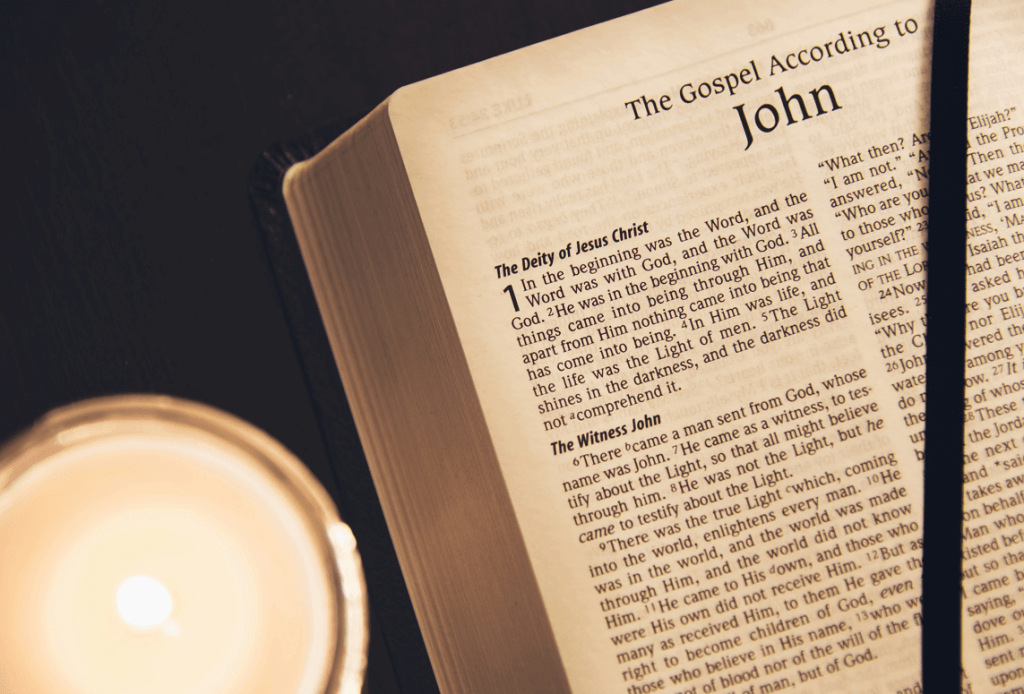
I share this to help raise awareness about the kind of mental difficulties some young adults can find themselves in when they take the Bible seriously.
I wouldn’t want anyone to conclude that because of my difficulties with religious concepts, it must follow that keeping one’s faith at a distance is desirable or, indeed, necessary for good mental health. But there are mental health considerations to be mindful of.
***
Although the panic attacks subsided that year, my mental illness developed into a series of depressive episodes fuelled by obsessive thoughts and compulsive behaviours with strong religious themes.
One theme was concern about my own perilous standing before God. This fear centred on my faulty interpretation of two biblical concepts I had come across.
The first concept was Jesus’ reference in the Gospels to blasphemy against the Holy Spirit, which he says, “will not be forgiven, either in this age or in the age to come” (Matthew 12:32). The other was a concept which came up in the Bible study group. Chapter 6 of the book of Hebrews talks about someone who has “fallen away” being unable “to be brought back to repentance” because “they are crucifying the Son of God all over again”. Both concepts triggered within me a fear of stepping past a hell-bound point of no return.
The other theme that caused me mental anguish was a preoccupation with others’ standing before God considering what the Bible says about predestination. This was an entirely new idea to me, one that had come up in church and Bible study that year. Predestination is something referred to in a few places in Saint Paul’s New Testament letters, which I interpreted through a Calvinist lens. This led me to believe those around me could be doomed to hell due to the Almighty’s predetermined decision about them. The Bible verse that appeared to state this most clearly was from chapter 9 of Paul’s letter to the Romans:
Rebekah’s children were conceived at the same time by our father Isaac. Yet, before the twins were born or had done anything good or bad—in order that God’s purpose in election might stand: not by works but by him who calls—she was told, ‘The older will serve the younger.’ Just as it is written: ‘Jacob I loved, but Esau I hated.’
The fear about my cliffhanger standing before God drove my anxiety, and my fear for others fed the depression because I was so shocked to learn that, apparently, God didn’t love everyone like I had always been taught at school. Instead, he seemed to love some and hate others even before they were born.
The catch-22 in all of this was that because I feared saying something unforgivable, I could not articulate to anyone what was troubling me so much about these religious beliefs. This served to reinforce my internalisation of these problems and the downward spiral of anxiety and depression I experienced.
From an OCD perspective, I became meticulous about my behaviour, and this expression of OCD is commonly referred to as “Scrupulosity”. A few examples give a flavour of what this looked like.
One day, during an English literature class, the professor teaching the course picked up my copy of The English Patient from my desk to read an excerpt from it. It was quite a normal occurrence in a class like that, but I emailed him later to apologise because I explained that I had sometimes been reading the book when using the bathroom, and I was concerned about the hygiene of him having touched the book.
On another occasion, during a midterm economics exam, I finished the paragraph I was writing after the lecturer called for “pens down.” After everyone else had left the hall, I told the lecturer about it and asked that I be penalised.
During a semester break, I took a holiday job at a grocery store. One of my tasks was to bag carrots for display. I took an exceptionally long time because I would check every single carrot for any sign of rot or other imperfection, and the store owner was not impressed with my productivity.
I could give dozens more examples, but you get the picture.
Around this time, I began to obsess about the predetermined eternal destiny of people around me. It was a torturous experience having regular conversations with people while at the same time imagining them in hell.
It led to significant pauses in my speech as I tried to continue the conversation with whoever I was talking to while, at the same time, screening my words for any sign of blasphemy due to the strong negative emotions I was feeling towards God.
I remember being at a party on campus and being introduced to someone. They told me their name, and it must have taken about 15 seconds for me to respond with, “My name is Will.”
They must have thought I was on drugs, and in an important sense, I was. The psychiatrist must have suspected me of experiencing psychosis because he prescribed me a potent antipsychotic with strong sedative qualities and a powerful side effect of making me ravenous (I say this all in hindsight—I was not made aware of any of this at the time).
On that drug, I remember sleeping like I had never slept before and finding it challenging to stay awake in lectures, particularly ones between breakfast and lunch. Speaking of meals, I began to eat about twice as much as usual, and I gained so much weight that I broke a bone in my foot.
***
The turning point for me in overcoming Scrupulosity was being properly diagnosed as having OCD and bipolar disorder during a psychiatric hospital admission. During those weeks in the hospital, as my body and mind started to recover, I decided to focus on what I knew to be true about the character of the Christian God, which I concluded to be one of goodness and sacrificial love for his creation.
Coming at just the right time, this focus put everything else troubling me about concepts like predestination into proper perspective. Remarkably, the troubling thoughts and compulsive behaviours surrounding these concepts melted away during those weeks in hospital after I was diagnosed. From there, I was able to resume practising my faith healthily.
To be sure, the Bible is a powerful book, and as my pre-diagnosis period showed, there are mental health considerations to be mindful of when reading it. One of the reasons I decided to become Catholic 10 years ago was the balance that one finds in its interpretations of the Bible.
If I take the biblical topic of predestination as an example, rather than definitively stating how it works, the Catholic Church has set boundaries around what one can rightly say about the matter. It affirms the reality of both God’s sovereignty and man’s free will. I think, regardless of your denomination, leaving it at that is a very good idea.
If you encounter something that troubles you when reading the Bible, don’t keep it to yourself. Talk about it with people you trust, and remember that your faith is meant to be a positive part of your life. If it is having the opposite effect, then something is going wrong.
Thanks to the wisdom of the Bible, I now look back at the hardships of that pre-diagnosis period as a time when God was doing a powerful work of grace in me that would bloom in the years to come and for the rest of my life.
If you want to hear the full story, check out my book Beating Hospital Grade Depression and Anxiety: A Lived Experience Guide to Recovering Your Body, Mind and Spirit or download the audiobook for free here.
Photo by Anthony Garand on Unsplash



 Will Turner
Leave a comment